Who Owns the Customer? Carrier-Agency-Producer-Client Relationships in 2026
CATEGORIES
COMPANY TYPE
As direct-to-consumer insurance products such as embedded and app-driven signups increase, the insurance industry faces a great debate over who owns a customer relationship. Let’s look at current industry trends for 2026 and into some of what we see coming in the future.
Yes, but no.
Yes, having an option for consumers to go straight to a carrier to write business can streamline that business process and can mean skipping the trickle down of commissions from carriers to agencies to producers. But many direct-to-consumer policies represent some of the sales that are lower-hanging fruit in the insurance world. Term life policies, renter’s insurance, mortgage insurance, extended warranties on appliances—these are the sort of policies that are successful in embedded, point-of-sale, direct-to-consumer sales.
Yet, agents are still the face of insurance for a reason. Plenty of policies from cyberliability to annuities fit into the old standby that “insurance isn’t bought, it’s sold.”
A working parent knows they need term life insurance. They can buy a 20-year policy for a clear dollar amount and schedule a physical online, done. But what about if that same person starts an online business, or wants to plan for retirement? Those are decisions people don’t want to make alone. Having a broker or agent who will sit and help someone sort through their needs and suggest what fits may be the only way a person will buy permanent life or annuity policies, or some kind of business liability. Carriers can’t afford to think about brokers and agents as only little datasets who do paperwork, because they are and will continue to be vital to the insurance sales process.
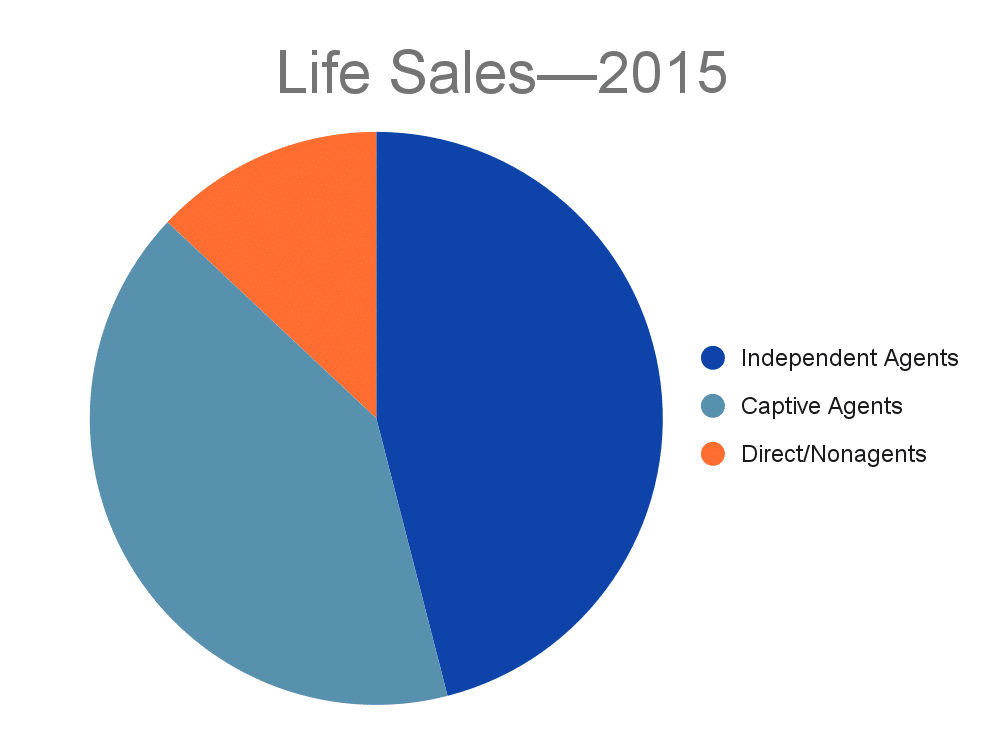
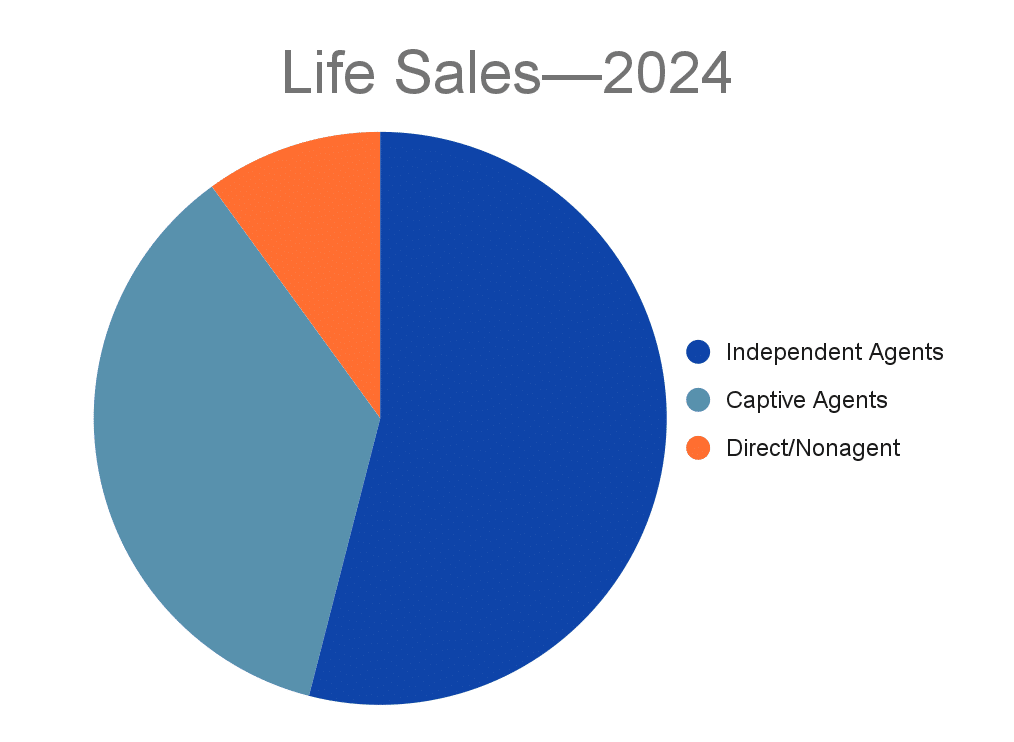
Being bullish on the role of human agents isn’t just optimism: It’s the reality of the market. Human agents actually increased their share of life insurance sales in the last decade. From 2015 to 2024, in the life insurance market, independent agent distribution grew from 46 percent to 54 percent; non-agent sales shrank from 13 percent to 10 percent. From 2020 to 2024, the percentage of annuity business sold by real agents didn’t change.
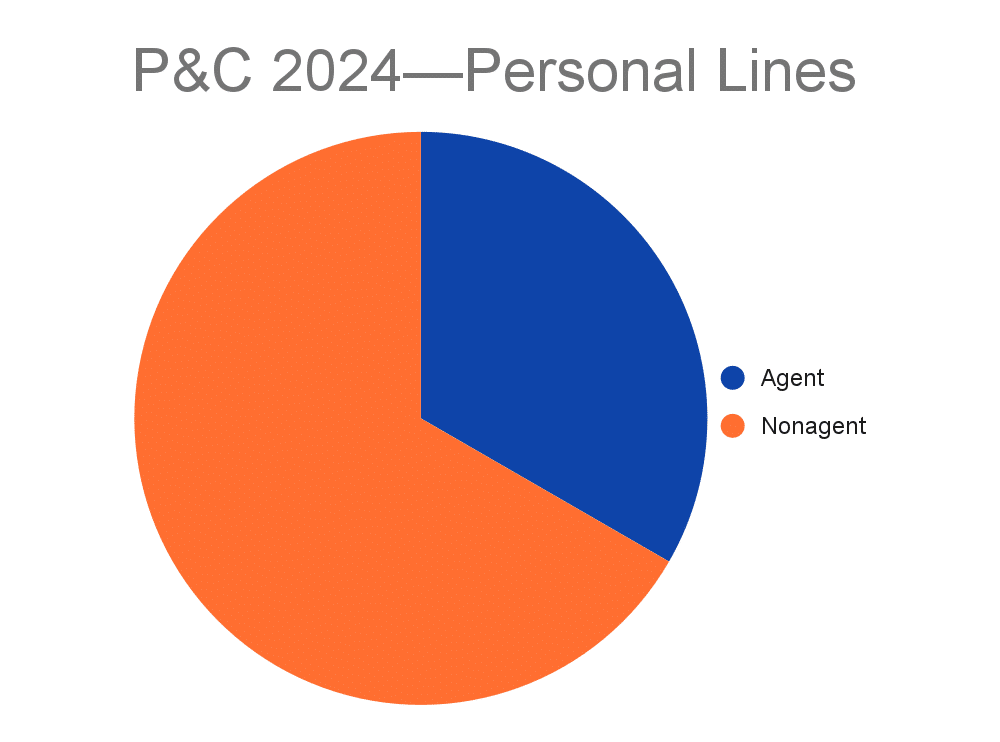
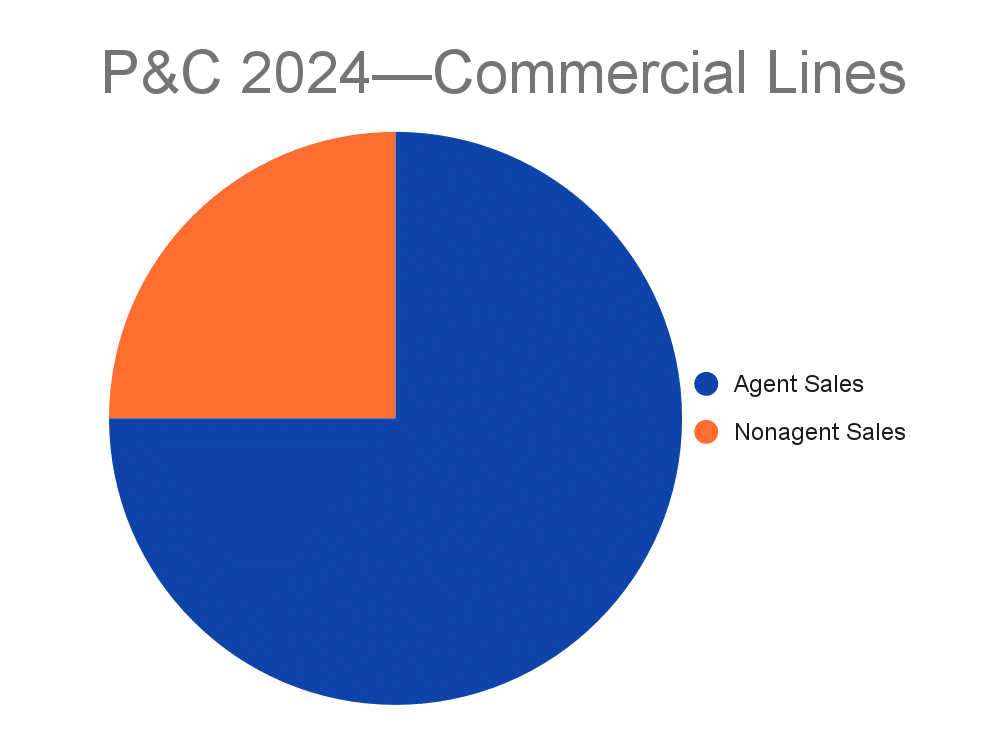
In property and casualty, two-thirds of personal lines business was sold direct or embedded, but commercial policies are still agent-involved, with 75 percent of sales generated by human insurance agents. And let’s be clear: The per policy values are much higher in commercial lines.
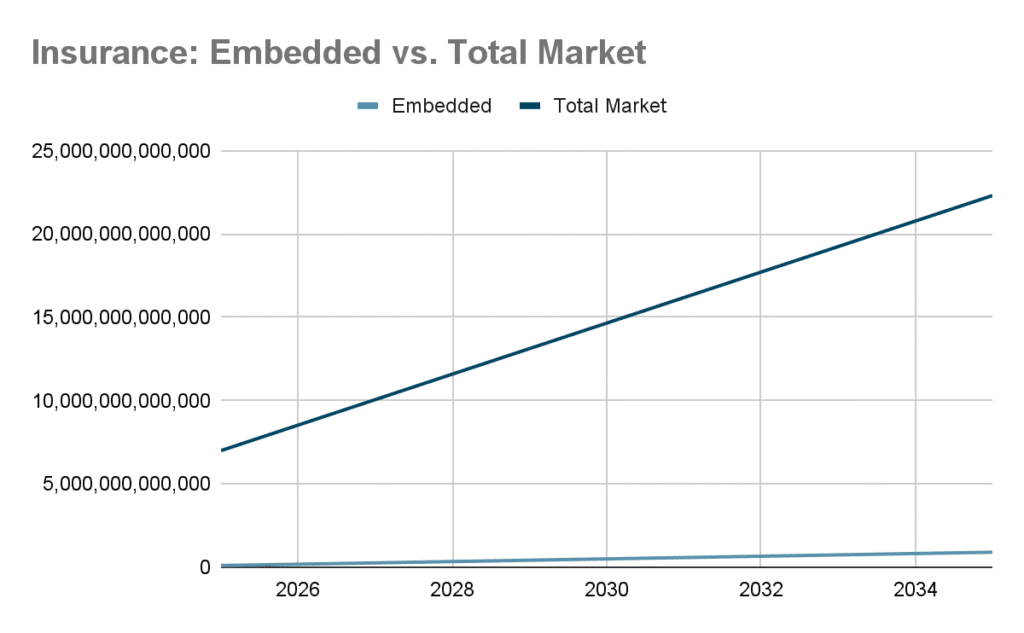
Embedded insurance has made a splash, and lots of carriers and companies are enthusiastic about its potential. For good reason, too: The current $130 billion embedded market is projected to reach $900 billion in 2035. Neglecting those lines means leaving billions on the table. But the $7 trillion insurance market is projected to more than double in that time, as well. Projections put P&C business in the realm of $17 trillion and life insurance near $5 trillion. If that’s the case, embedded will have grown like bonkers, but still only represent a fraction of the total addressable market of insurance.
The numbers bear it out, that the human element matters. While people say they’re unafraid to query AI to get some financial best practices and baselines, they’re far more likely to turn to a human for actual long-term financial planning. And 88 percent of people want to consult an actual human agent when they’re buying “high commitment” insurance policies.
Insurance carriers that operate at massive scales can’t afford to work only a year at a time. Your tech roadmap has to take aim at an infrastructural state that may be five years into the future. To connect your tech today to the business you want to be in the next decade, you’ve got to prioritize:
Prospective customers want to be able to self-service, until they don’t. When a customer is ready to speak to a person, they want to talk to someone who isn’t going to need a half hour of backstory to understand where they are in the sales process and what they need. Being able to autofill and identify customer needs is critical.
When customers have to wait for someone to fill out paperwork, you lose the sale. Having tech that can “automagically” fill accurate data and make back-office processes happen in the background, the speedier your quote-to-bind process is and the faster you can lock in a prospect.
Your staffers spend too much time double-checking producer work and answering questions. By prioritizing tech that allows for self-service tools and auto-reminders that provide a continuous feedback loop, you allow your staff to work on higher-leverage work and lower the amount of time you spend training and recruiting administrators.
Carriers and agents both win when technology enables insurance agents to do what they do best: Sell. Tech that dials the phones faster may be helpful, but removing administrative tasks entirely from an agent’s to-do list opens up hours of time. When agents don’t have to keep track of every paperwork detail, license number, and renewal notice, then they’re able to spend more time building the relationships that help them know clients in a way that keeps business sticky and makes sure they cover all of a person’s bases.
Spending on 80 different tech pieces with overlapping use cases and gaps of data silos isn’t an effective use of your business dollars. Exposing those tech overlaps and gaps is painful, but doing the work of discovering how to consolidate and better connect your various systems is essential if you don’t want to still be quietly hemorrhaging on your margins in 2030.
Our customers at AgentSync are building robust tech platforms for their agents that take as much of the back-office burden from the agents as possible, giving them more time with clients, which has in turn grown their business. As a Sales professional, I can attest that people remember how you made them feel, and it’s just as true in insurance sales as anywhere. Being able to devote time to listening to your clients makes for better business, something your agents can’t do if they’re trying to remember the last few digits of their NPN to fill in paperwork at the end of client meetings.
If you’re ready to consolidate your tech stack for a better, more connected experience that enables your agents and clients alike while keeping your business spend tighter, contact us at AgentSync and see what we can do to help.

Get the latest updates on new insurance industry content.
Each hour spent triaging data is an hour a producer can’t…
As it stands, producer-to-carrier contracting is less than ideal.
Tech debt drove the team to evaluate total cost of ownership…